Welcome back everyone to my third blog! Unit three in my Biorenewable Energy class at the University of Minnesota has been such an interesting unit so far. In this unit, I dove deep into understanding what wood is made of, how it’s adjusted for various uses, and how the wood absorbs and releases carbon. One thing that caught my attention in this unit was the use of wood for construction. So for this blog, I plan to discuss the good, the bad, and the neutral parts of using wood for construction.
The Good:
To start this section, let’s have a scenario of you cutting timber to make a frame for your garden. After you are down cutting all the timber, you collect the sawdust and small pieces and throw it all away without thinking twice about it. However, companies have found a way to use the extra scraps and sawdust to make wood products that are more valuable and useful. This is known as engineered wood. There are many different types of engineered wood and they are all used for various things. For instance, cross-laminated timber (CLT), which a type of engineered wood made from gluing solid-sawn lumber together. This type of wood in construction is predicted to be the solution for large amounts of CO2 emissions because wood can store lots of carbon, unlike concrete and steel. One cubic meter of wood can store one ton of carbon, which is based source (1). An acre of forest is expected to store .5 to 5 tons of carbon, which is based on source (2). CLT is already being used to build large buildings. For example, the Mjøstårnet building is the largest building made out of CLT. More are more builders are thinking about using CLT to build buildings because it’s more environmentally friendly than using steel and concrete and is easy to use to construct buildings. To sum up this section, some good parts of using wood for construction is that it’s more environmentally friendly than concrete and steel and makes use of wood scraps.
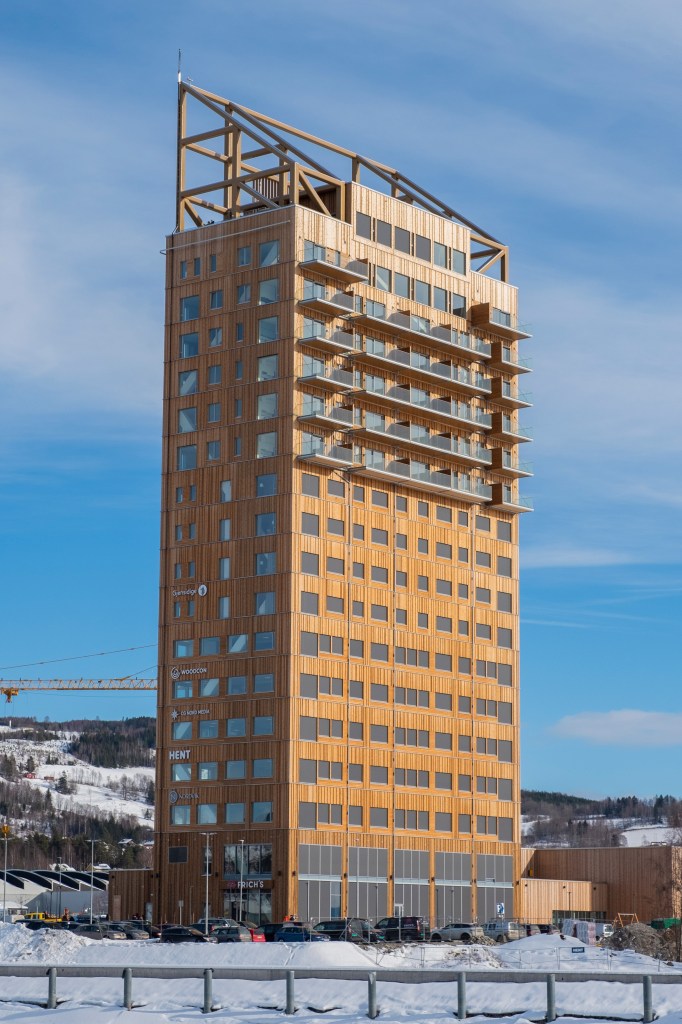
*Image of the tallest building made from CLT based on source (3)
The Bad:
Though wood used for the construction of big buildings sounds like a good idea, we have taken into account the dimensional changes in the wood and the drying process. The wood used for construction needs to be dried properly. If the wood isn’t dried properly, it could be subject to changes in dimensional sizes. The wood could shrink or swell in all directions based on the environment it is in, which could cause problems in the future. For example, if we take wood from a humid place and put it in a less humid place, the wood will result in a loos of moister and the wood will shrink. Another negative thing about the use of wood is drying costs. Drying wood is expensive and if most of the building is made out of wood, the cost of drying the wood will be high. To summarize this section, some bad things come with constructing a building primarily out of wood, which includes dimensional changes and the cost of drying.
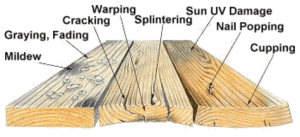
*Image of dimensional changes in wood outside based on source (4)
The Neutral:
The use of primarily wood for constructing buildings to reduce carbon levels is a great idea. Wood is said to hold the carbon for 100-200 years if it’s used for construction, which is based on (lesson 18) source (5). Where does the carbon go after the 100-200 years you may ask? After those years have passed, the carbon is released back into the atmosphere over a varying period. If we keep on using wood for construction, we could take back that carbon and other carbon in the atmosphere to store it in wood. This process of releasing carbon and then storing it is known as carbon neutrality. To some up this section, wood for construction could be used to store carbon for a while but eventually, the carbon is released back into the atmosphere.
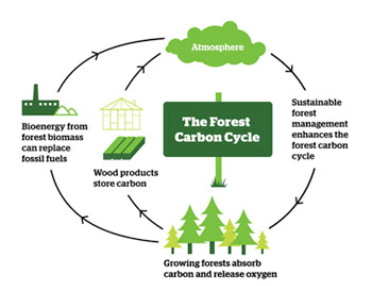
*Image of carbon cycle from source (6)
Summary:
The use of primarily wood for construction will be more environmentally friendly than using steel or concrete. But we also need to take into account the varying dimensions of wood based on its environment and the cost of drying it. Finally, wood is a great way of storing carbon for a long period and if we use more and more of it, we will be able to better balance our carbon footprint on the planet.
Sources:
- Source 1: https://www.ted.com/talks/michael_green_why_we_should_build_wooden_skyscrapers?language=en
- Source 3: https://www.dezeen.com/2019/03/19/mjostarne-worlds-tallest-timber-tower-voll-arkitekter-norway/
- Sources 5: Lesson 18 “Is Wood Good?”, BBE 1002, UMN


